Proportions
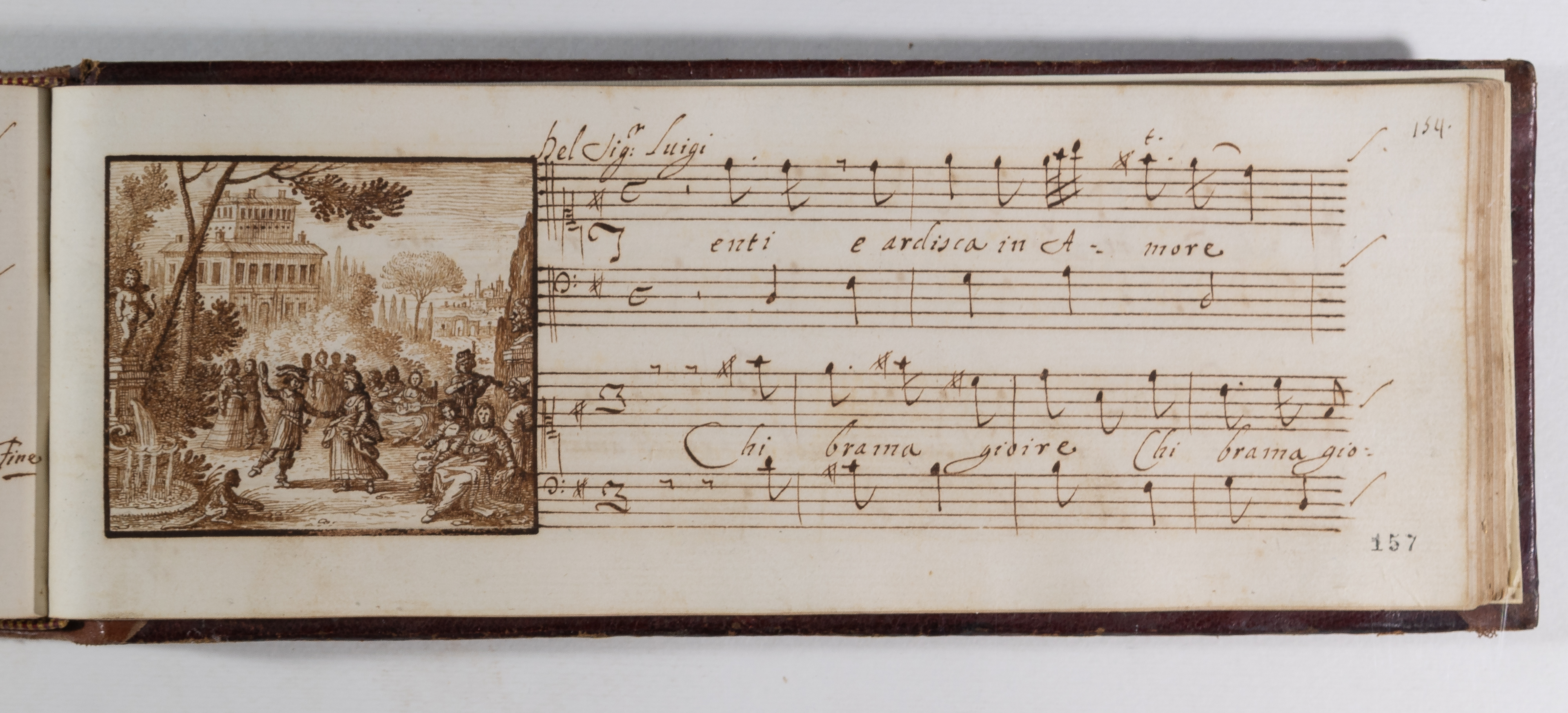
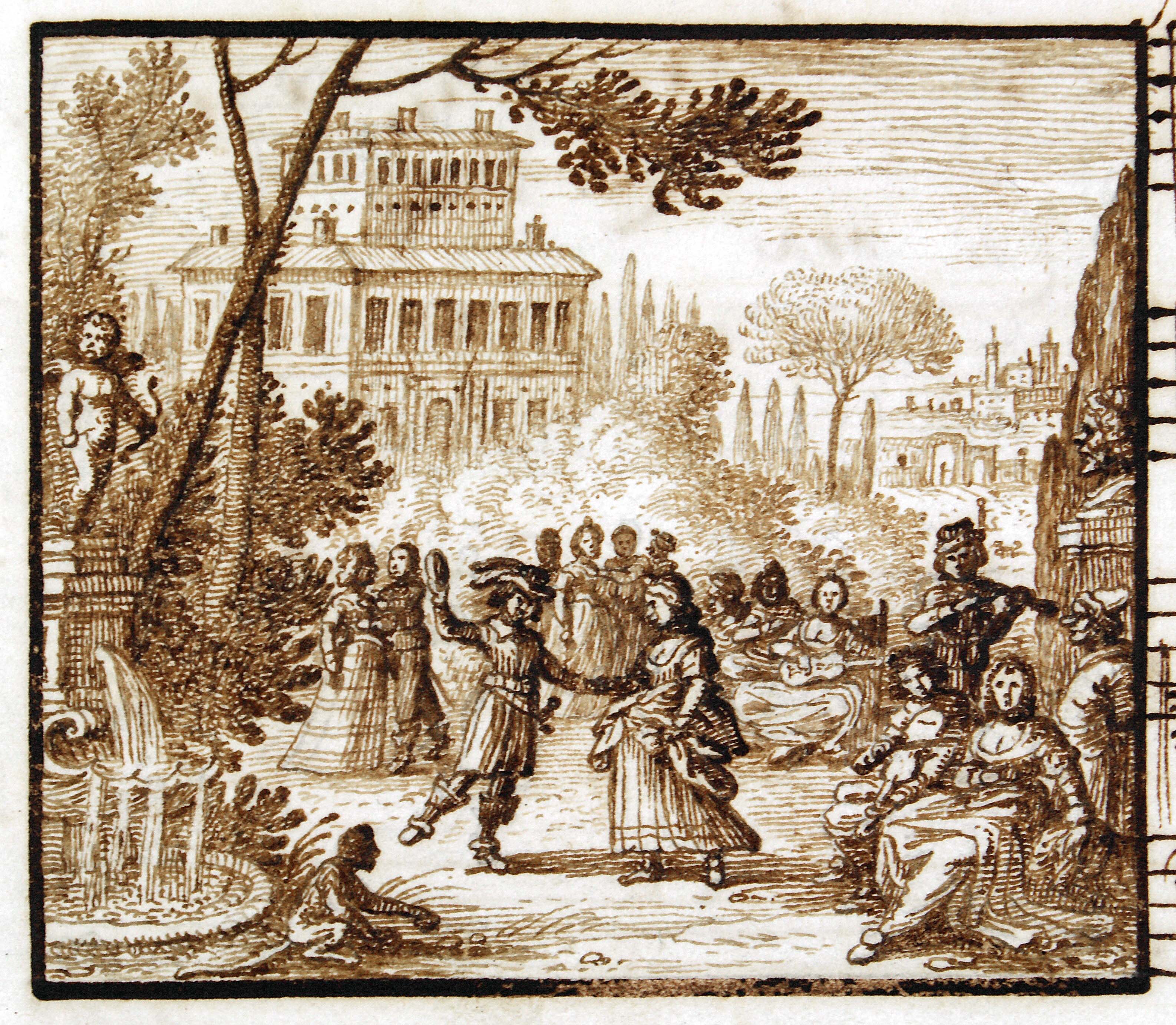
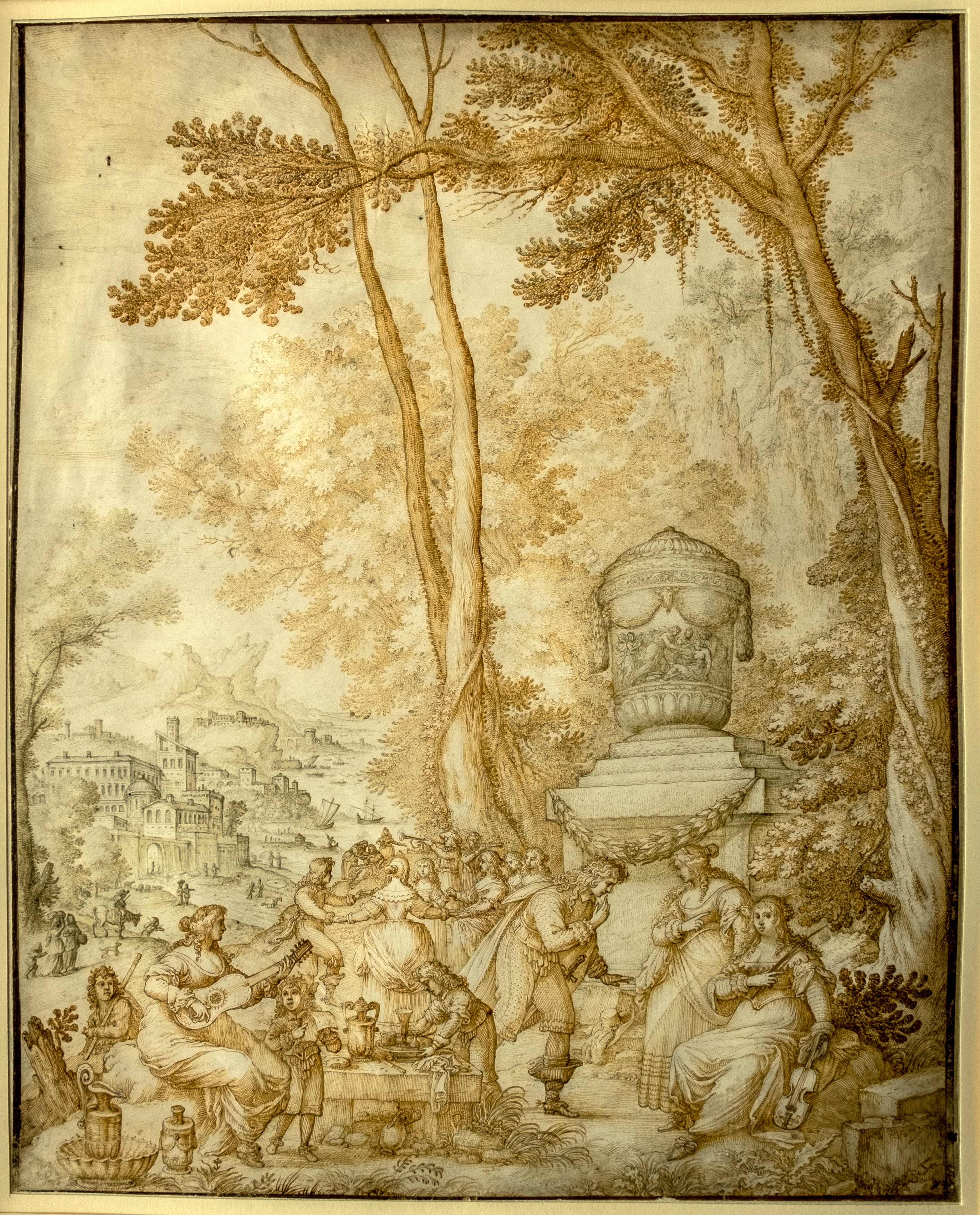
Pilgrims resting in the Villa Celimontana dancing and making music
Tenti e ardisca in amore
| Catalogue ID | 1.31 |
|---|---|
| Artist | Domenico Jacovacci (1604-1661); Master of the Roman Songbook (1650-1660) |
| Object type | miniature |
| Date | 1652 |
| Place | Rome |
| Collection |
Biblioteca Casanatense (Rome) Giuseppe Baini (1775-1844) (Rome) |
| Inv. no. | I-Rc Ms2478.25 |
| Tech. / support | brown ink, graphite, paper, pen |
| Measures | 60 × 80 mm |
| Subject | 41A6 — garden 41A651 — garden fountain 41C111 — giving food 43C9 — dancing 48C73 — musical instruments; group of musical instruments |
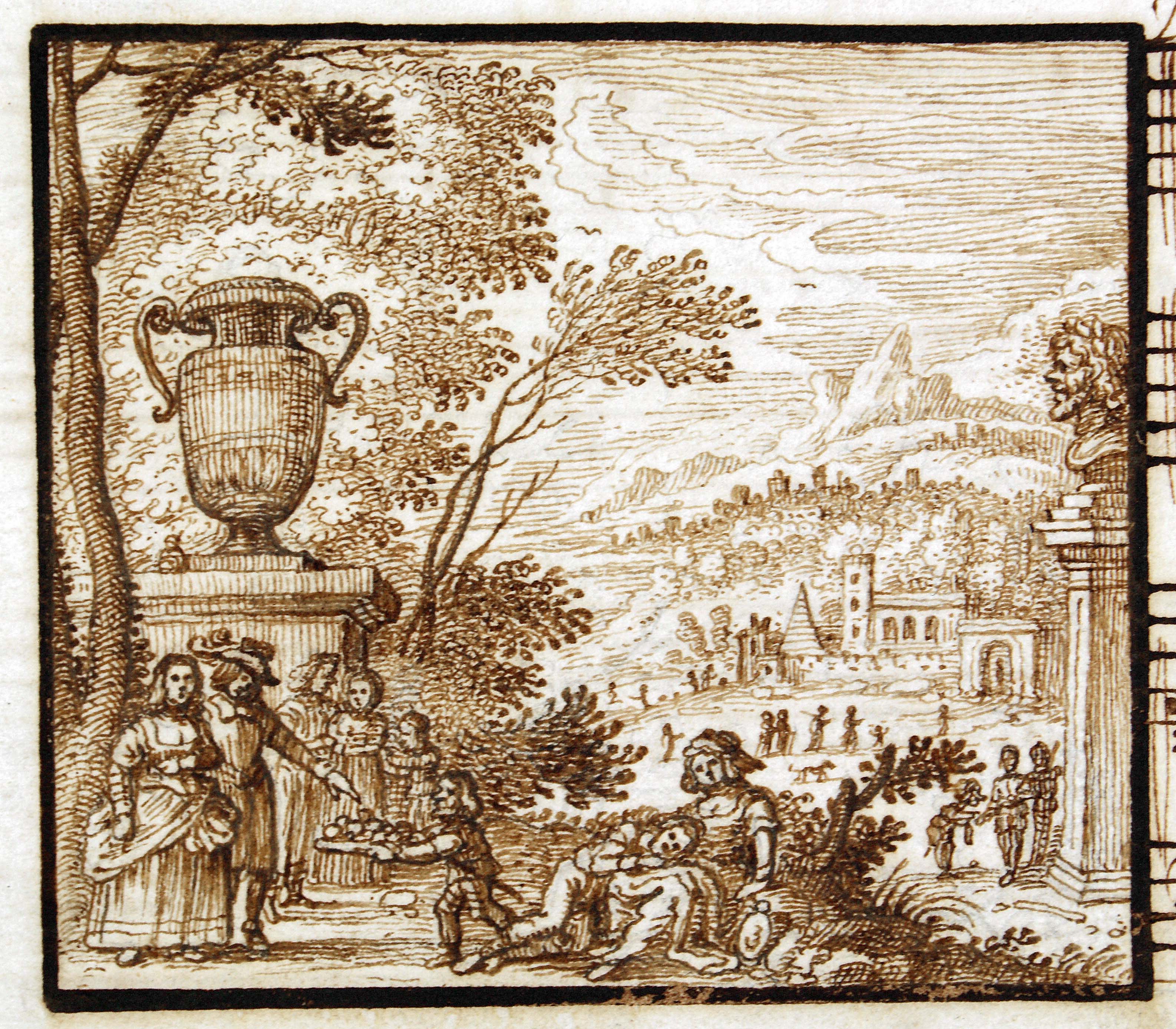
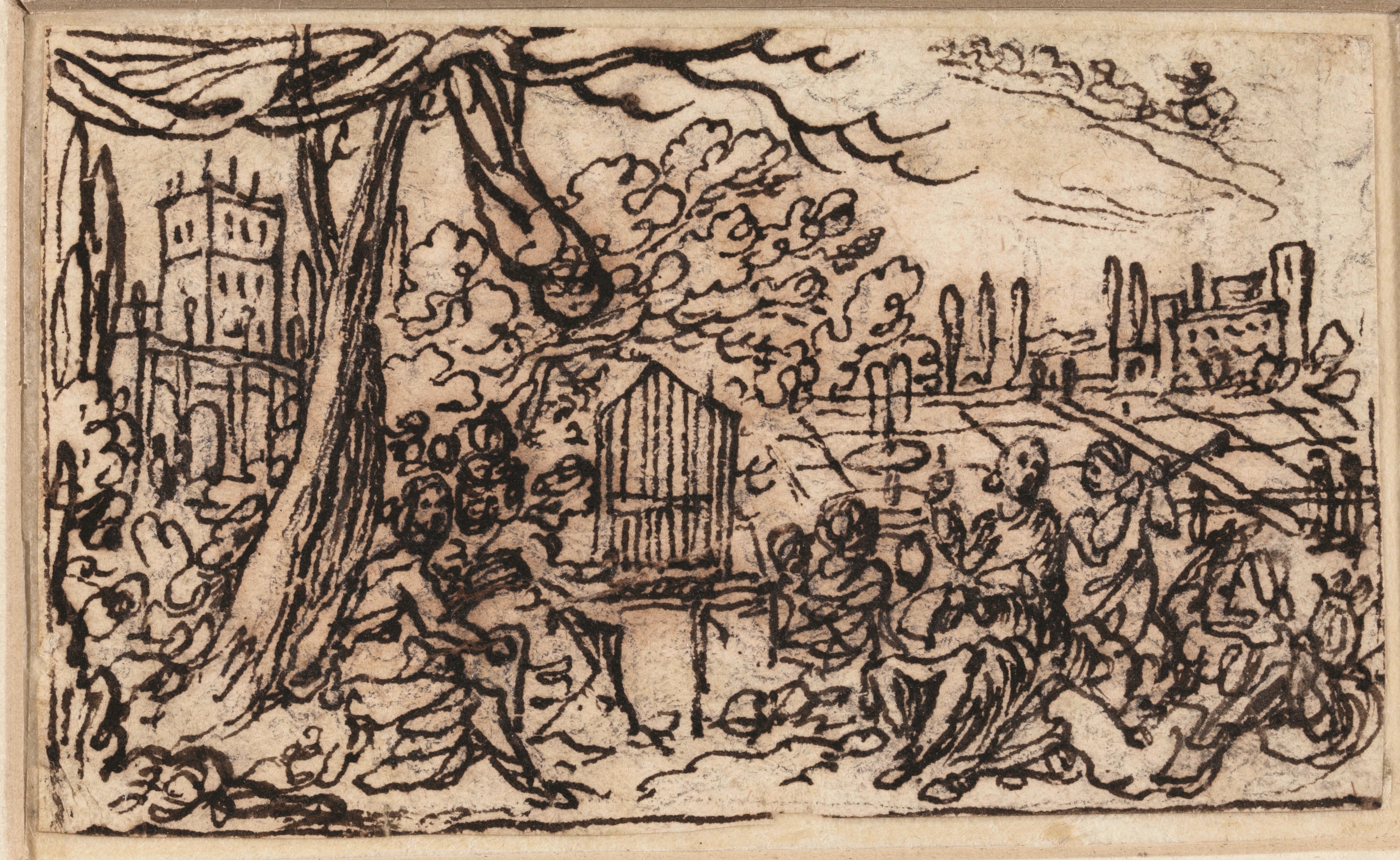
Merry company in a garden.
During the second day of the Visit of the Seven Churches, pilgrims were allowed to rest in the garden of the Villa Celimontana Mattei, once a simple vineyard. Here, the oratorian friars organised a refreshment with food and beverages for 1300 people (in 1652). Whilst on the pilgrimage, religious songs were sung (Laudi); it is feasible to assume that during the time of rest, secular songs were performed.
- Cantata
- Tenti e ardisca in amore
- Composer
- Luigi Rossi (ca. 1597-1653)
- Manuscript
- Casanatense cantata album — I-Rc Ms2478
- CLORI
- https://cantataitaliana.it/scheda/800
Bianco, Anna. Images for the Music: Drawings and secular cantatas. Ph.D. dissertation, Leiden University, 2025
Bianco, Anna. “The Master of the Roman Songbook.” Going South: Artistic Exchange between the Netherlands and Italy in the 17th Century, vol. IX, RKD & NIKI, 2023.
Lazzarini, Andrea. La Spettacolarità Del Gaudium. La Visita Filippina Delle Sette Chiese. Fratelli Palombi, 1947.
Biblioteca Casanatense — 1844–nowadays current
Giuseppe Baini (1775-1844) — 1844
![[“A”] Merry company in a garden](/media/records/216/1_76_0_mu304M8.jpeg)