Proportions
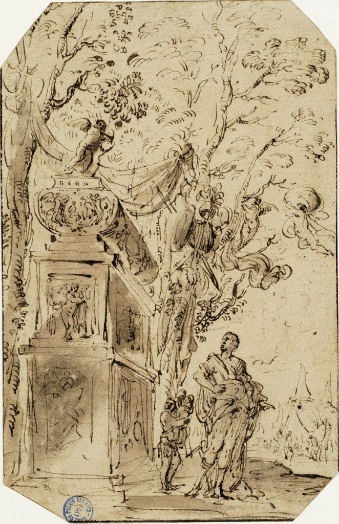
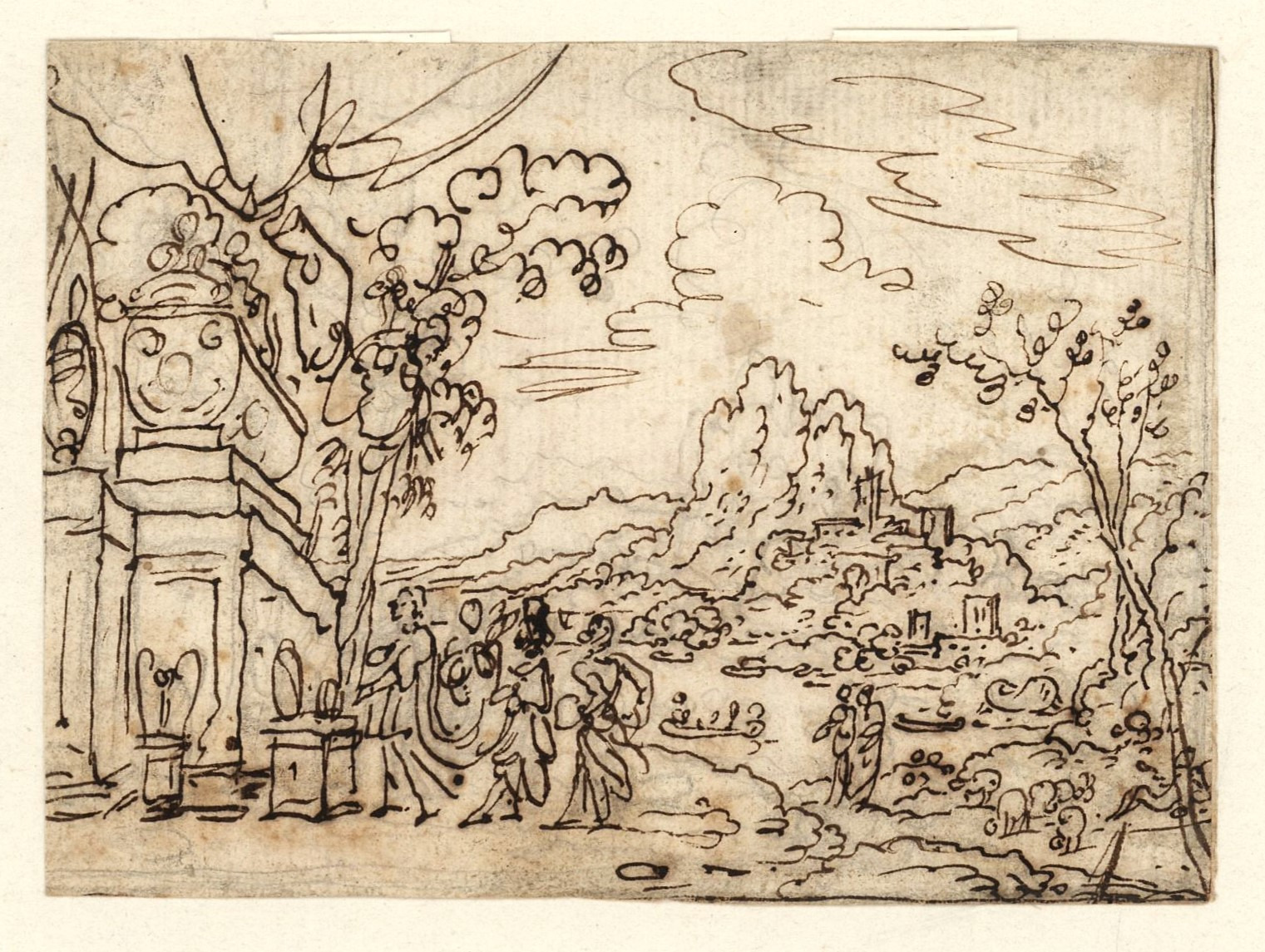
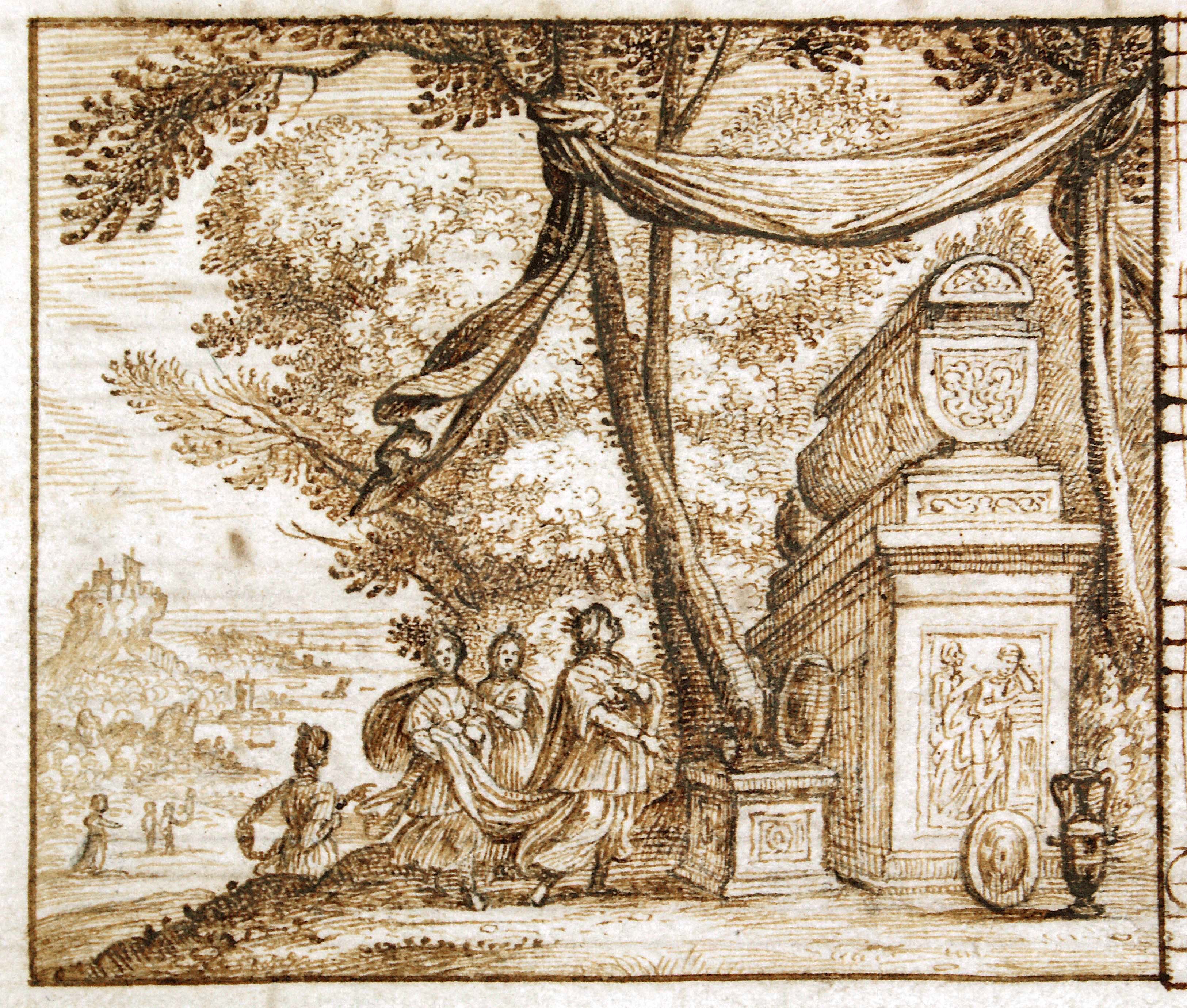
A group of women visiting a tomb
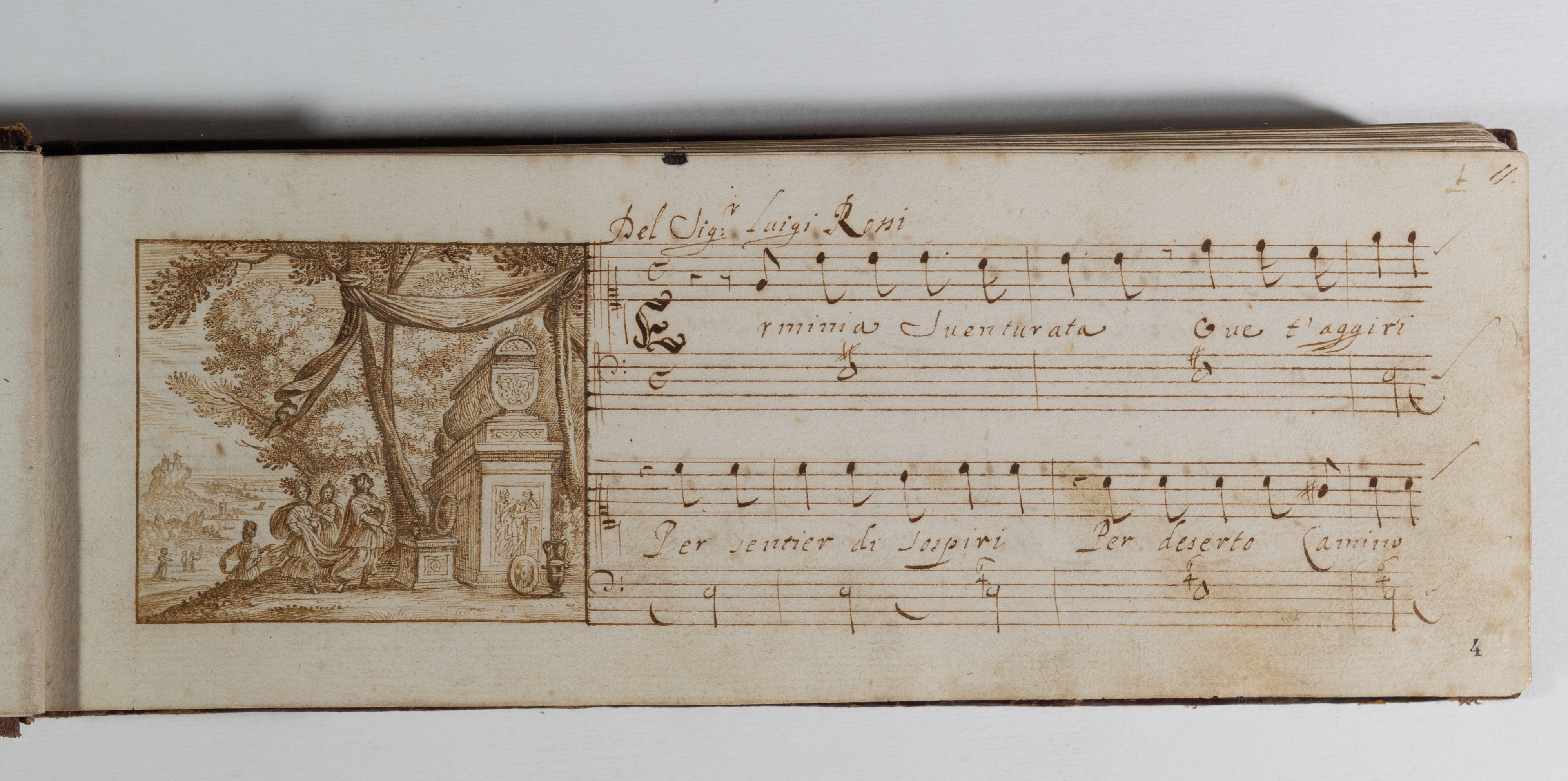
Erminia sventurata ove t'aggiri
| Catalogue ID | 1.07 |
|---|---|
| Artist | Master of the Roman Songbook (1650-1660); Domenico Jacovacci (1604-1661) |
| Object type | drawing · initial: Vignette - non allusive |
| Date | 1652 |
| Place | Rome |
| Collection |
Biblioteca Casanatense (Rome) Giuseppe Baini (1775-1844) (Rome) |
| Inv. no. | I-Rc Ms2478.01 |
| Tech. / support | brown ink, graphite, paper, pen |
| Measures | 68 × 81 mm |
| Subject | 25H15 — forest, wood 25I12 — prospect of city, town panorama, silhouette of city 31D15 — adult woman 42E31 — grave, tomb |
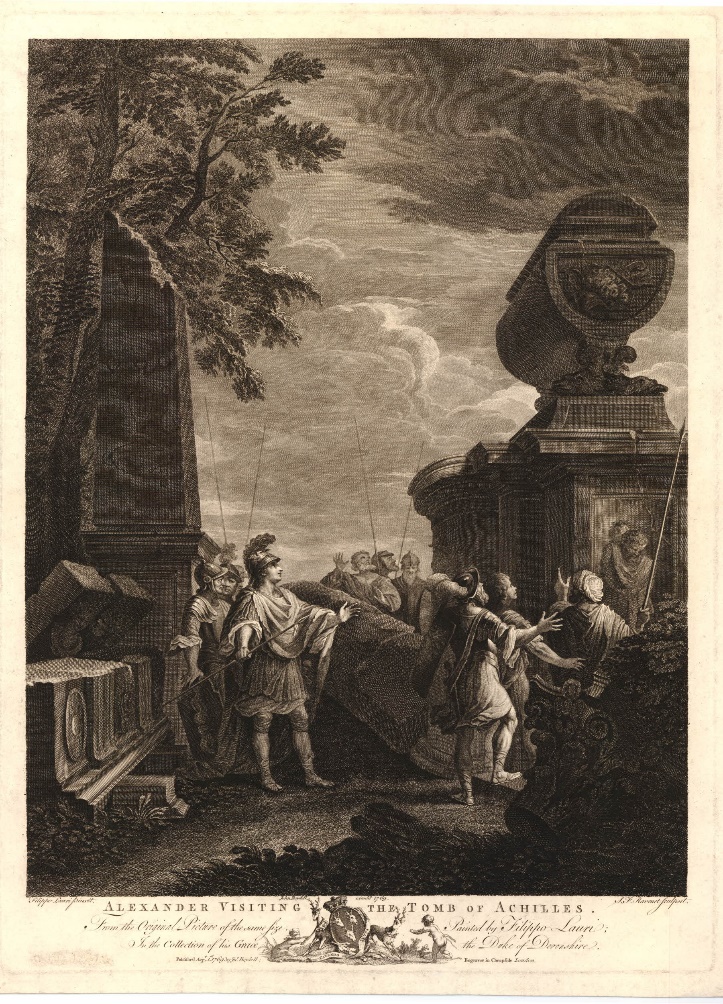
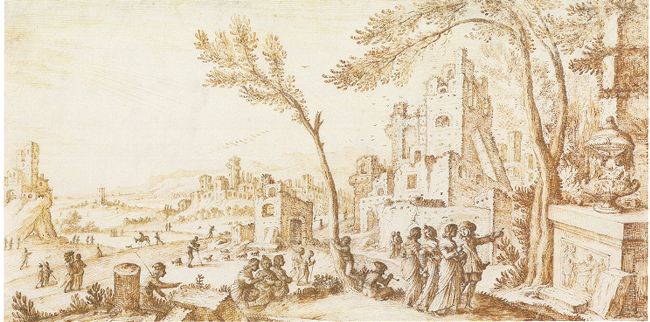
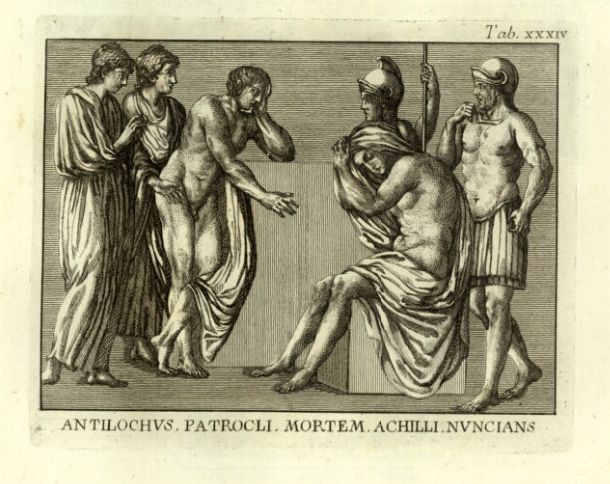
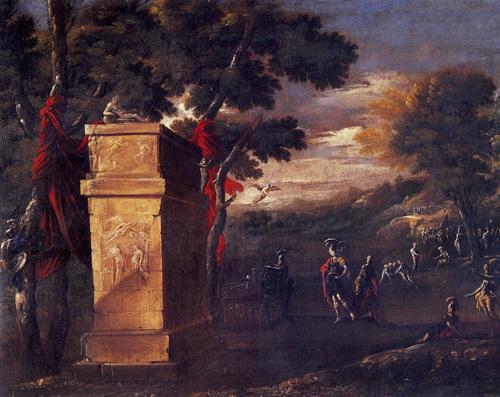
The drawing presents a classical funerary setting with a monumental sarcophagus placed under a canopy of trees, adorned with drapery and framed by natural elements that create a theatrical atmosphere. Three female figures are inceding beneath the trees, engaged in what appears to be a moment of intense conversation or lament. In the background, a hilly landscape with distant architecture suggests an idealized or allegorical space. Although the scene does not illustrate a specific episode from Gerusalemme Liberata, the composition resonates strongly with the tone and themes of Erminia’s lament. The motifs of abandonment, sorrow, and fatal disillusionment in the poem—culminating in her tears imagined as the source of the River Jordan—find visual echoes in the mournful atmosphere, the monumental tomb, and the anthropomorphic presence of nature in the drawing. The elegiac setting and classical allusions support a reading of the image as a visual pendant to Erminia’s monologue: a space of memory, feminine despair, and theatrical pathos. While not a literal illustration, the image shares the same emotional and symbolic register and could be understood as an emblematic counterpart to the poetic text. On the pedestal to the right is visible The announcement of the death of Patroclus to Achilles inspired to one of the so called Antichita’ Mattei (see 1.07d).
- Cantata
- Erminia sventurata ove t'aggiri
- Composer
- Luigi Rossi (ca. 1597-1653)
- Manuscript
- Casanatense cantata album — I-Rc Ms2478
- CLORI
- https://cantataitaliana.it/scheda/540
Annibaldi, C. (1987). La cappella musicale... (pp. 44-46)
Bianco, Anna. Images for the Music: Drawings and secular cantatas. Ph.D. dissertation, Leiden University, 2025
Caluori, Eleanor. The Cantatas of Luigi Rossi: Analysis and Thematic Index. UMI Research Press, 1980. (nr. 70)
Klaper, Michael. “An Italian in Paris: Giovanni Bentivoglio (1611–1694) and a Neglected Source for Seventeenth-Century Italian Cantata Poetry.” Recercare, vol. XXX, no. 1–2, 2019, pp. 129–54. (p. 132, n. 4)
Biblioteca Casanatense — 1844–nowadays current
Giuseppe Baini (1775-1844) — 1844